English
It is becoming increasingly important to use your own solar power as much as possible: try not to feed the power back into the grid unless there is no other option, and try to do the things you needed to do anyway like laundry and charging the car, as much as possible when the sun is shining.
As far as EV chargers go, there can be big differences between them. Most charging stations are relatively 'dumb', in the sense that they can only be 'on' or 'off'. When they're 'on' they deliver full power, and when they're 'off' they do nothing at all. That's nice if you only want to charge your car as quickly as possible, but it's a shame if you want to take into account favourable electricity rates or free electricity from your roof.
There are also charging stations that can save money by using electricity intelligently and at the same time help to relieve the power grid. The latter is becoming increasingly important, because the power grid in Holland is getting congested while more and more people buy electric cars. If every car would get a smart charger, there would be more than enough space on the grid.
Being able to charge with solar power in particular is a major advantage. You would like things to work the same way as with a home battery, i.e. that as soon as there is even a small amount of surplus solar power, it immediately flows to the car. But beware! It doesn't work that way with cars. Cars need a certain minimum current to start charging, and in most cases that is 6 Amps. That means that a minimum of (6 Amps x 230 volts =) 1380 Watts of power is needed before the car starts charging. So if you want to charge the car on ‘surplus solar power’, you will need to have at least 1380 Watts surplus before the charging process starts. In the winter this can be a problem: fortunately there is also the possibility to start charging with part sun and part grid power. (In this article we explain how we can set this on our chargers.)
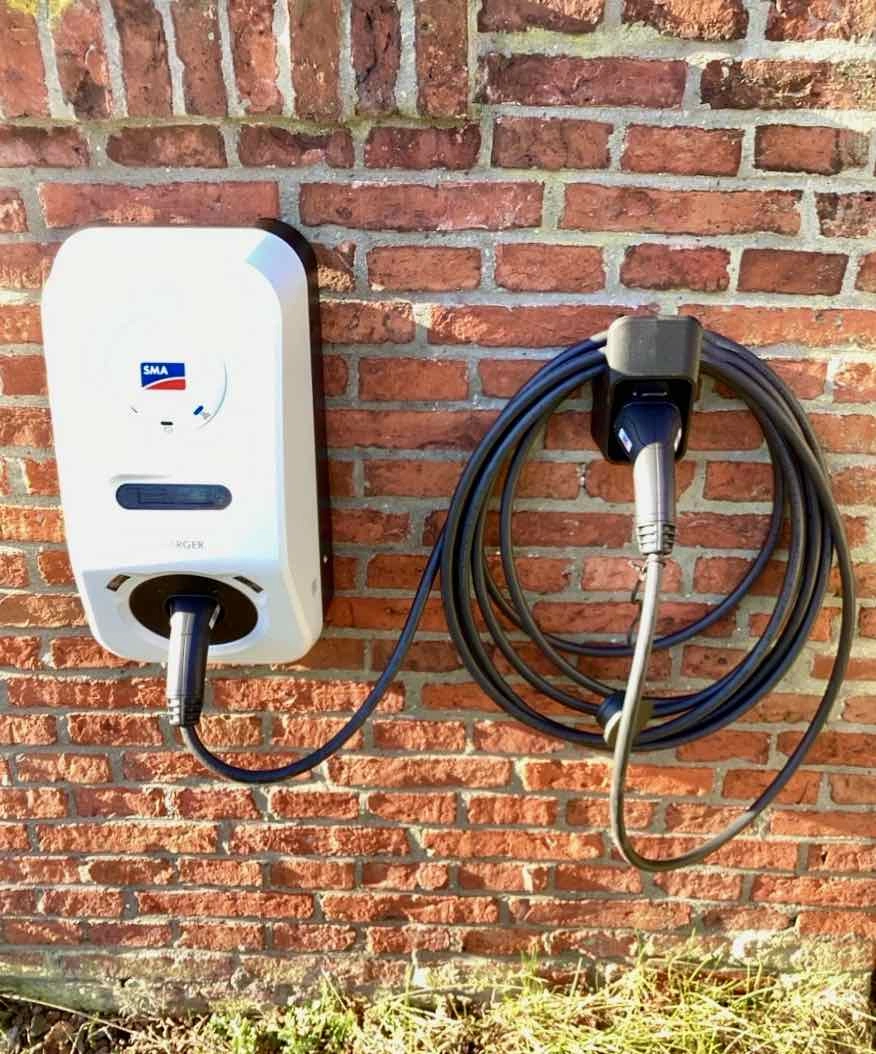
An SMA charging station with cable. You can also order the device without a cable and then use the charging cable from the car.
There's an extra advantage if the charging station can take electricity rates into account. This is certainly interesting for people with a dynamic energy contract. If the charging station knows that the electricity is extremely cheap at a certain time of day or night and therefore charges extra hard at that time, it can save you a lot of money. SMA chargers, which communicate via the Sunny Home Manager, do not yet have this option today, but SMA is working hard to be able to use dynamic electricity rates from the third quarter of 2025.
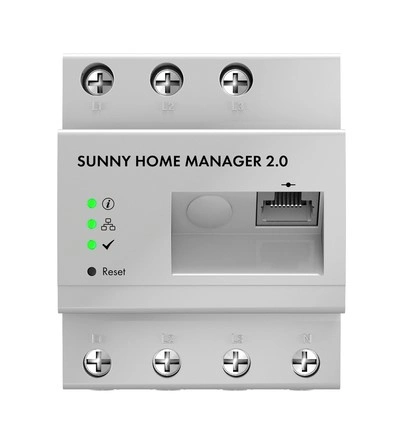
The Sunny Home Manager will be linked to the dynamic tariffs of the EPEX spot market in the third quarter. This will make charging the car even more affordable for people with a dynamic energy contract
The SMA charging stations can do something that not many other charging stations can do, which is automatically switch from single to three-phase charging and vice versa. The reason why that's intersting is that the charger can start charging with just a little bit of sunshine (namely the above-mentioned minimum charge of 1380 Watt), and if there is more solar power later in the day, it switches to 3-phase charging to charge a bit faster. Later in the evening, when there's less surplus solar power, it simply switches back to one phase. In this way, you get the most out of your own power and use the grid as little as possible: very smart!
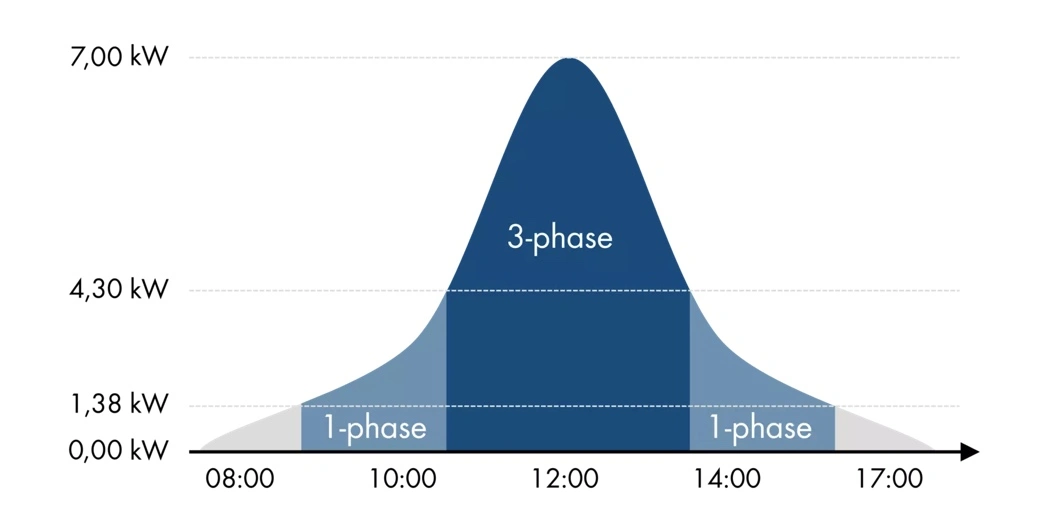
Thanks to the switch from 1 to 3 phases and back again, the SMA charging station gets more energy from the panels than most other 'smart' charging stations on the market
It remains to be seen how the future of 'bi-directional' charging will be: in principle, the SMA charging station is suitable for not only charging a car but also discharging it and making that energy available for the home. But at the moment there are only a few cars on the market that allow this so-called V2H (Vehicle-to-Home) discharging. In any case, the SMA charging station can only discharge AC (alternating current) and not DC (direct current), so if you think you want to do this, first check whether your car is suitable. Incidentally, this option is not yet activated on the SMA charging stations, but it will be possible to enable it with a future software update.
We're seeing increasing interest among our customers in our smart EV chargers, and hear positive feedback from people who have had them installed. Interested in what such a charging station can do for your energy consumption? Let us know, we're ready to help!