English
 6 min Reading time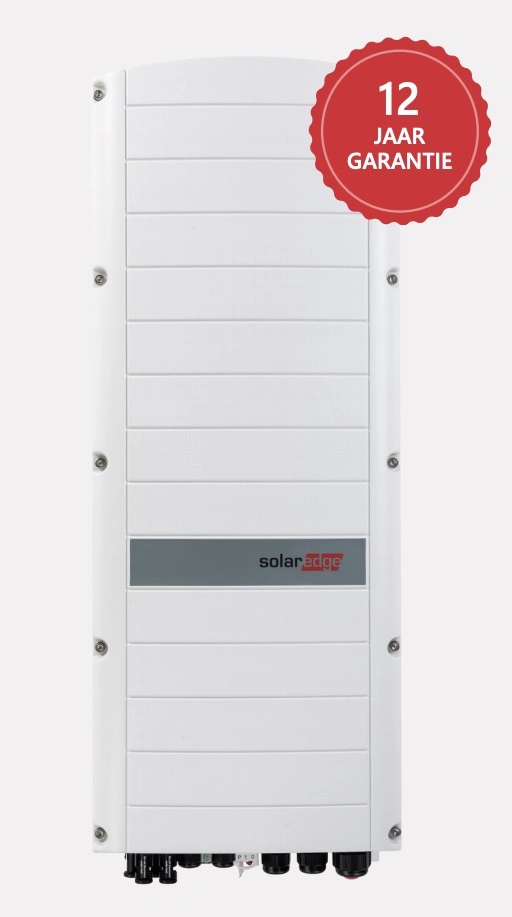
Besides SMA, SolarEdge is the other brand of inverters that Zonnefabriek installs. SolarEdge is best known for its optimizers, but these days it also offers battery inverters for residential installations. The latest of these is called the “StorEdge” 3-phase inverter, in power ratings of 5, 7, 8 and 10 kiloWatts.
The StorEdge can be used in two ways: as a hybrid inverter, or purely as a battery inverter. Read more about the two options below.
'Hybrid' in this context means that the unit is both solar panel inverter and battery inverter in one, and therefore does not require an additional solar panel inverter in the system. This is useful for those who know right from the time they buy the solar panels that they will be adding batteries, even though for most people the addition of batteries doesn't come into play until a later stage. Also, if desired, people with an existing SolarEdge PV system can add such a StorEdge inverter at a later date purely for storing solar power in batteries.
When a device is used as a pure battery inverter, the connection for solar panels remains unused. Even if a person does not have solar panels at all, he or she can install a batery inverter. In that case, the battery can be used for trading on the electricity market.
Even rival SMA, which likes to position itself as a “technology leader,” has now included 3-phase battery inverters in its portfolio; the “Sunny TriPower Smart Energy” (STPSE) hybrid devices. The SolarEdge StorEdge and the SMA STPSE both offer the option of connecting both solar panels and batteries to the same device, but this is not necessarily necessary: the two devices can also be used with only solar panels or only batteries. However, there are differences between the two brands: the SolarEdge version, for example, only works with low-voltage batteries (LV, from “Low Voltage,” which in batteries means 48 volts), while the SMA version actually requires high-voltage batteries (HV, with a voltage of several hundred volts). Often high voltage batteries are slightly more efficient than low voltage batteries; they suffer less loss due to resistance. On the other hand, high-voltage batteries tend to be slightly more expensive. Both brands are compatible with batteries from different battery manufacturers, but also offer their own brand of batteries (the “SolarEdge Home Battery” or the “SMA Home Storage” batteries).
Another difference is that the SMA devices offer the option for 'Back-Up,' or emergency power, while the SolarEdge models do not (yet) have that option.
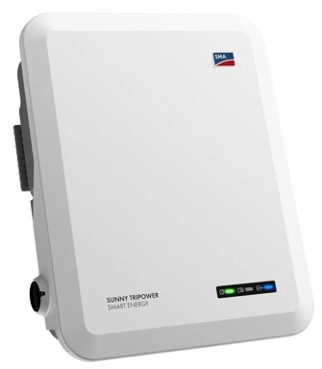
Sunny TriPower Smart Energy hybrid inverter
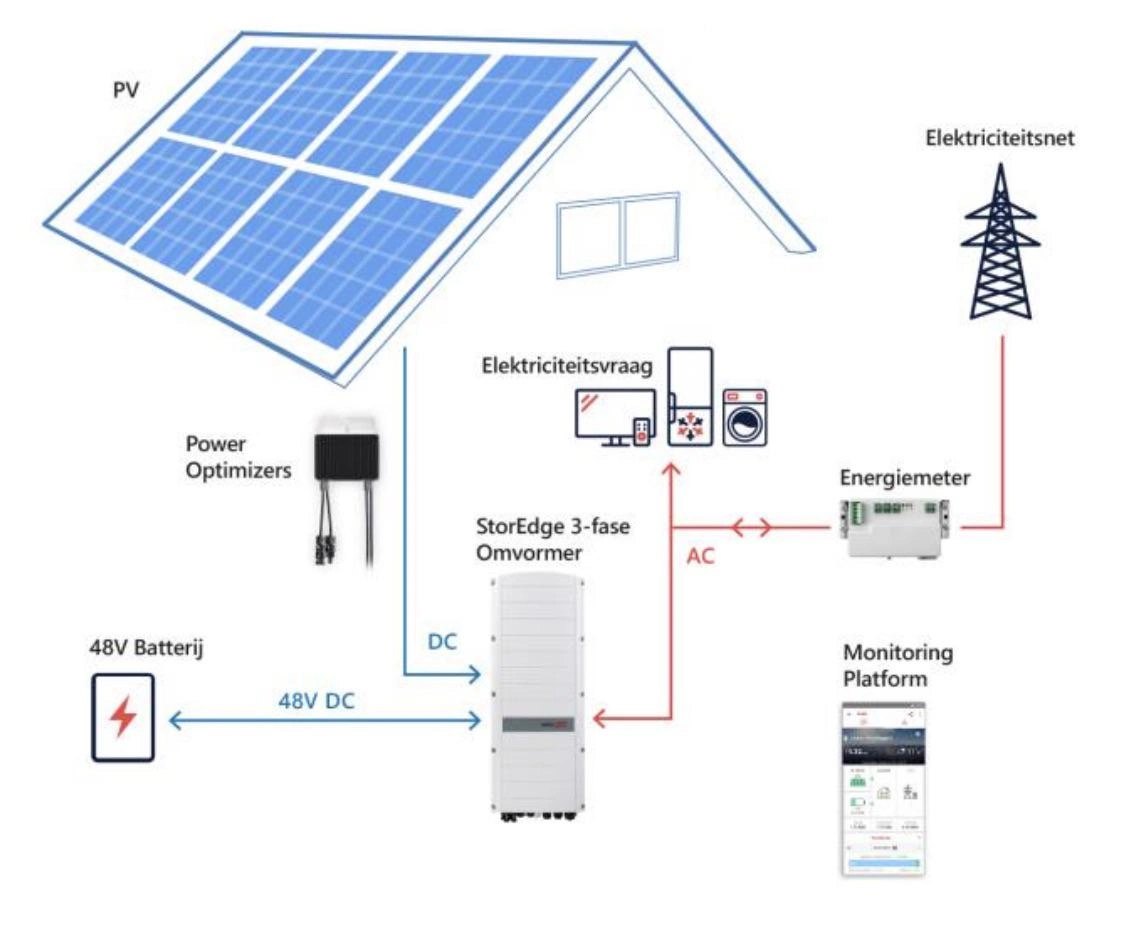
The SolarEdge 3-phase battery inverter at home
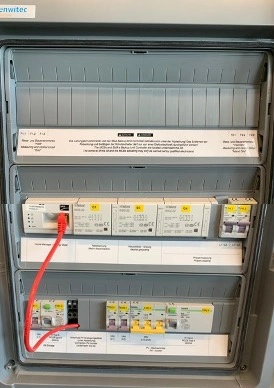
By the way, a backup system does not immediately require you to install a three-phase battery inverter, even if you have a 3-phase grid. When the grid fails, a so-called “Automatic Transfer Switch” (the device that automatically disconnects your home network from the grid in the event of a grid failure) can connect the three phases in the home together into 1 phase. This allows one battery or hybrid inverter to continue to power all groups. It is true, however, that certain appliances that run only on 3 phases (or: power current) (such as some charging stations) will then temporarily not work.
Want to learn more about the pros and cons of a home battery or are you considering adding a battery to your existing solar system? Then schedule an appointment with one of our consultants.